Sign in | Register now | Like us on FacebookLike Us | Follow us on TwitterFollow Us

Milwaukee's Daily Magazine for Friday, May 24, 2013

Fri
Hi: 59
Lo: 40
Sat
Hi: 57
Lo: 44
Sun
Hi: 58
Lo: 47
Advertise on OnMilwaukee.com
Two black-throated green warblers who kindly posed for me in Milwaukee's Lake Park last weekend.

Warbler time

I worked in a Downtown office building for many years. Times would come – I never kept track of the time of year – when we would find beautiful little birds dead on the sidewalk every day for a few weeks. I always wondered what was happening, but kept forgetting to look it up. What were those birds?

At the same time I would walk my dog in Lake Park and smile at the birders in their floppy khaki hats. I would squint up into the woods where they gathered, and I didn’t see anything. What did they see?

Then I learned the answer – to both questions. It was warbler time.

Late April and May in Wisconsin is warbler time. Many people experience warbler time mostly by finding dead birds, but warbler time is much more about life than about death – life and strength and persistence and the rhythm of seasons and climate.

Of the many species of wood warblers, more than 30 come through Wisconsin every spring, in huge numbers. They winter far south, usually in Mexico or Central America. They summer far north, usually in Canada. To find their way from one to the other, they follow long visible lines – like the coast of Lake Michigan. Luckily for us, they stop in Milwaukee on the way.

They are beautiful, beautiful little birds, brightly colored and patterned in many different ways. The Yellow Warbler like a fat little sunburst. The Cape May Warbler with jowls the color of a fresh egg yolk. The Black-Throated Green Warbler with its bright yellow cheeks. The American Redstart, black and orange like a tiny oriole. The Palm Warbler with its little brown hat. The Yellow-Rumped Warbler, all over the woods this spring, with its black Zorro mask and bright yellow patches.

How to find warblers

Surprisingly for anyone who has lived here awhile and never noticed them, warblers are easy to find. They almost never come to feeders, because their favorite food is live bugs. (Have you grumbled about those clouds of tiny bugs in the parks right now? Be grateful!) Warblers are in th…

Read more...
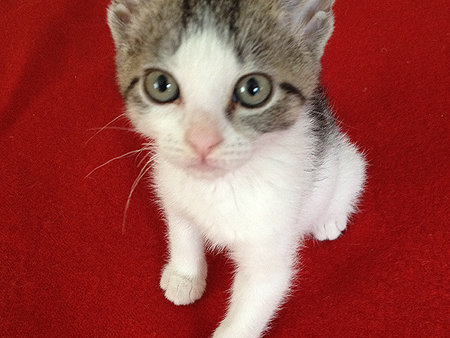
Meet Mitchell.
Meet Mitchell.

Taking the risk

"I’d like to have an animal, but I don’t want to be sad when it dies." I hear this more often than you might imagine.

When they talk to me, people often start sentences with, "I’d love to have an animal, but ..." I listen closely to what comes next. To save a lot of homeless animals’ lives, we need to inspire a lot of people to have animals. Every time I hear, "I travel," "I’m allergic," "My cat wouldn’t like it," and so on, it helps us plan better ways to find families who can make a place for a homeless animal.

I understand what people mean when they say, "I don’t want to be sad." Loving an animal, like loving a person, opens you to pain. Most people are shocked when they realize for the first time how much it hurts to lose an animal friend. They’re shocked again when they realize it doesn’t get much easier the second time, or the third, or ever. That quiet cat who used to finish your cereal milk leaves an even quieter gap when she’s gone. When my old dog died, I kept taking our night walk – without him – for weeks.

When someone looks at me and says, "I couldn’t go through that again," I understand.

It’s easy to offer a different point of view; in fact, many people end up reframing the obstacle themselves. Losing an animal is so painful because loving an animal is so wonderful. The only way to avoid the pain is to miss the wonderful part. After some time passes, "I don’t want to be sad" often turns into "I’m ready for a friend." When that happens, when the person is ready, there’s a homeless animal waiting at a nearby shelter to be that friend.

For me personally, there’s a second answer to "I don’t want to be sad." Over the years, I’ve found myself grateful not only for the good times with our animals, but actually grateful for the grief we’ve experienced when they passed away. Looking back, I know that grieving for animals has made me more ready for other kinds of grief when it has come our way. Especially as a parent, I fee…

Read more...
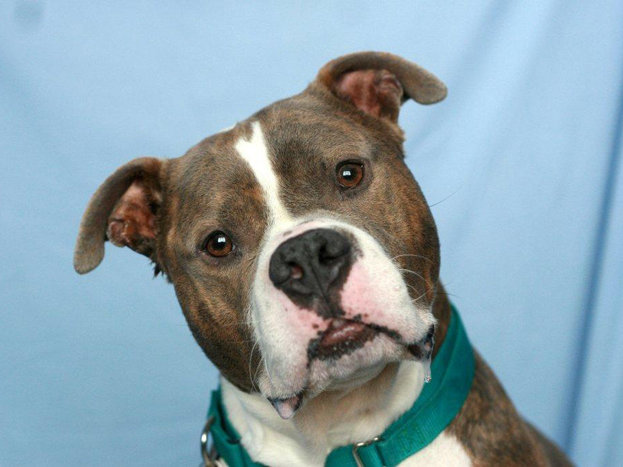
Goku, a 4 year-old Weimaraner, available for adoption at the Milwaukee Campus.

An important meeting to save dogs

Ever heard of Wisconsin’s Conservation Congress? If not, you’re not alone. But you can make a difference for dogs if you attend a Conservation Congress meeting tonight, April 8, in your county.

The Wisconsin Legislature created the Conservation Congress in 1934, saying, "The conservation congress shall be an independent organization of citizens of the state and shall serve in an advisory capacity to the natural resources board." The "natural resources board" sets policy for the Department of Natural Resources, or DNR, and the Conservation Congress still advises it, often with great influence. The Congress holds regular meetings in each county where anyone can vote on "delegates" to the Congress and give direct input by voting on specific questions.

Dogs in the wolf hunt? Yes, unless something changes.

This spring, one question on the ballot is especially important for me. In 2012, the Wisconsin Legislature created a wolf hunting season, and specifically allowed the use of dogs in wolf hunting. That made Wisconsin the only state to allow dogs in wolf hunting. After a lawsuit by the Wisconsin Humane Society, Wisconsin Federated Humane Societies, and others, a judge barred the use of dogs in the 2012 hunt.

The judge’s order ended up proving that no one needs dogs to hunt wolves. The 2012 wolf hunt was supposed to last until February but ended in December because hunters had killed the maximum number of allowed wolves in every "management zone" in the state, even though they weren’t allowed to use dogs.

After the 2012 hunt, though, the judge removed his preliminary order. Unless the DNR or the legislature changes the current rules, dogs will be allowed in the 2013 wolf hunt.

We know from sad experience that confrontations between wolves and dogs end horribly, for dogs and often for wolves, too. Wolves can’t climb trees like bears, or fly away like game birds. What they can do is tear a hunting dog apart with their teeth. It has happened far too often alrea…

Read more...
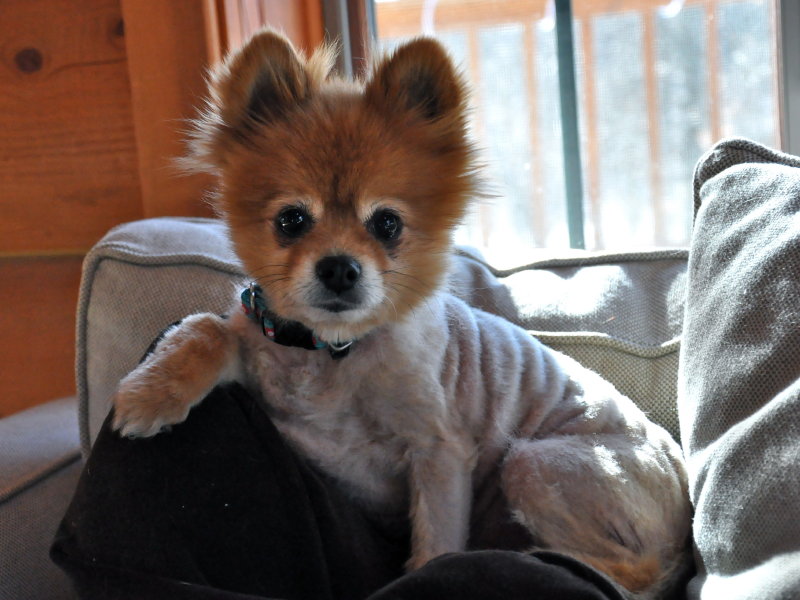
Shakira is 4-years-old, and waiting for you.

If you want the dog of your dreams, get a grown-up dog

Puppies. They sure are cute. But one major reason people get a puppy is completely mistaken.

I said it once. You might have said it. You have friends who have said it. "I want a puppy so I can raise it to be exactly the dog I want."

It’s not our fault we think it’s possible to raise the perfect dog. The publishing industry has been working overtime to make us think so. If you go to the category "dog training" at Amazon.com in March 2013, the first book on the list is Cesar Millan’s How To Raise The Perfect Dog. Other titles include Sophia Yin’s Perfect Puppy In 7 Days, Sam Walker’s How To Raise the Perfect Puppy, Paul Silas’s Raising The Perfect Puppy ... you get the idea. These authors represent many different philosophies of dog training but there’s one thing they all seem to agree on: if you raise a puppy right, you get a perfect dog.

I believed this until I got a puppy. I got a puppy because I wanted the perfect dog. I bought books whose philosophies I trusted and I did everything right. Socializing, loving, boundaries, everything.

I love my dog. He’s a better-behaved, happier dog because I did all those things. But he’s not a perfect dog. He’s sweet and nervous and jumpy and kind, great with other dogs and skeptical about new people. He turned out to be ... himself.

The "person" check

Nowadays, I use a little reality check when someone makes a claim about dogs: if I put "person" in the sentence in place of "dog," would it make sense? This doesn’t always work, of course, but it’s often helpful. "All dogs of X breed are (aggressive, smart, sweet)" makes no more sense than "All Irish people are (whatever)." "All dogs want dominance" makes no more sense than "All people want dominance." And "How to raise the perfect dog" makes no more sense than "How to raise the perfect child."

Don’t get me wrong. The early development of both dogs and children is very important. There are better ways and worse ways to raise both dogs and children, a…

Read more...