

On April 24, 1953, a national television audience viewing a world lightweight championship fight in Boston was disgusted when challenger Tommy Collins was knocked down 10 times by champion Jimmy Carter before referee Tommy Rawson got around to stopping the mismatch in the fourth round. TV stations and newspaper sports departments everywhere were deluged with calls of protest.
"The worst exhibition of boxing officiating I have seen in 50 years," declared National Boxing Association president George Barton. "If (Rawson) was a referee in Minnesota [Barton's home state], I'd take away his license."
In The Ring magazine editor Nat Fleischer wrote, "Battered down seven times in the third round ... poor (Collins) had to submit to additional punishment that placed his life in danger. And all because Tommy Rawson, an old-time fighter, saw more fit to exhibit his skill in counting from one to eight – a baby's job – than the use of common sense, efficiency, and a human heart."
Robert Christenberry, chairman of the New York state boxing commission, lamented that "millions of people witnessed this black eye to boxing, and it will take boxing a long time to make up for it."
Just 10 days later, a well-known Milwaukee referee was driven out of boxing by fans and reporters who thought he stopped a fight too soon.
Ted Jamieson was a former national amateur champion and professional boxer who became a licensed referee in 1928. The 58-year-old Jamieson had officiated hundreds of fights when he stepped into the ring at the Milwaukee Arena on May 4, 1953, to referee the 10-round main event between fourth-ranked heavyweight contender Dan Bucceroni of Philadelphia and Wesbury Bascom of St. Louis, ranked eighth in the 175-pound light heavyweight division.
The day before the fight, Bascom told Ray Grody of the Sentinel that it was a "do or die fight for me," and that he would either knock Bucceroni out or be knocked out himself. Going into seventh round of the fight, Bascom was behind on the scorecards but it was a fierce, competitive match. With about a minute left in the round, a Bucceroni left-right combination sent Bascom reeling, and after the Philly heavyweight landed a few more punches Jamieson stopped the fight and declared Bucceroni the winner.
"Bascom couldn't believe it," reported Grody in the next morning's Sentinel, "and threw himself to the floor, pounding the canvas with both hands. He kept shouting 'no, no.' He arose, tears rolling down his cheeks, as he tried to argue with the referee. He was almost beside himself with despair."
Journal sports editor R.G. Lynch was biting. "An old gent's bedtime comes early," began his account of the controversial fight. "So, with 11 o'clock approaching, referee Ted Jamieson stopped the Bucceroni-Bascom fight at the Arena Monday night and went home to hit the hay. The 4,453 customers, however, were not ready for bed. They broke into an uproar of protest which raged for a half hour."
According to Lynch, the fight proved that Jamieson's best days as a boxing referee were behind him. "The Jamieson [of earlier years] wouldn't even have thought of stopping (the fight)," he wrote. "He would have been enjoying the brawl as much as the fans."
Two days later, Jamieson turned in his referee's license. "Fans seem to want a boy practically murdered, but I want no part of that – never did," he said. "I've refereed for 28 years and I can say from the heart that no boy, pro or amateur, ever was hurt in the hundreds of bouts I've handled. It's been my policy to stay on the safe side. That's why I figured Bascom had enough of that belting round the head. His eyes were getting puffed, and you could see he was jolted every time he was hit ... If I had let it go until the 8th or 9th and then something had happened, everybody would be saying, 'Why didn't he stop it earlier?' I did and I'm glad. I'd do it again because I don't go in for legal murder."
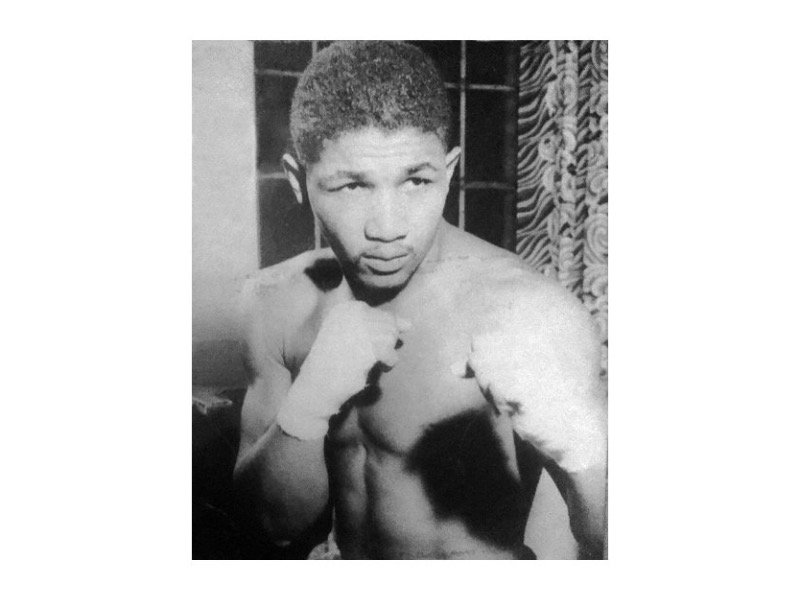
All this comes to mind with the news that Wesbury Bascom passed away on July 22 at age 83. After the Bucceroni fight he had four more bouts, losing three. According to the obituary in the St. Louis Post-Dispatch by Michael D. Sorkin, in the 1970s Bascom graduated from college and then taught for three decades in St. Louis elementary schools. "One of the best teachers in the world," commented a former student online.
Take a bow, Ted Jamieson.